

Couples Counseling in Five Forks, Simpsonville, SC
You’re good at solving problems. Except this one.
Couples therapy for committed partners who want to communicate better and feel like a team again.


Somehow, you keep having different versions of the same argument.
Maybe it starts with money. Parenting. Sex. The house. Your in-laws. Work. Who is carrying more. Who forgot to do the thing they said they would do. The comment that landed wrong over dinner.
You love each other. You’ve built a good life together. But somehow, the same conversations
keep ending in the same place—and you’re ready to find a better way forward.
The topic changes, but somehow, the conversation doesn’t.
One of you tries harder to explain your side. The other gets defensive, frustrated, or quiet. Someone feels misunderstood. Someone walks away. Eventually, you decide to drop it because you’re exhausted and there are lunches to pack, emails to answer, and a life that still needs to keep moving.
A few hours or days later, things are mostly fine again.
Until they aren’t.
And when the next disagreement begins, it can feel strangely familiar.


You’re probably not really fighting
about the dishwasher.
Most couples get stuck because somewhere underneath the argument is something more important.
Do you hear me?
Does what matters to me matter to you?
Can I depend on you?
Is there room for what I need, too?
When those questions remain unanswered, a surprisingly small disagreement can begin carrying the weight of a much larger one.
Couples counseling can help you slow the pattern down enough to understand what is actually happening between you, and then how to respond differently.

“We need to communicate better.”
Almost every couple who contacts me says some version of this. And they're usually right.
But when couples say they want better communication, they rarely mean they need a lesson on active listening.
What they really mean is they want to bring up something difficult without immediately regretting it. They want to feel heard without having to make the same point six different ways. They want to disagree without someone shutting down, becoming defensive, or saying something they wish they could take back.
And sometimes, they simply want to enjoy talking to each other again.
Better communication is about creating a relationship where both of you can stay present long enough to understand what is actually being said.

You don’t want a different marriage.
You want this one to feel different.
You may be frustrated with each other. There may be resentment that has accumulated over years. Intimacy may have faded. You may have become stuck in roles neither of you particularly likes.
But underneath all of it, there is still something important:
You want this relationship.You aren't coming to couples counseling to determine whether you should stay together. You're coming because you already know that you want to, and you don't want to keep repeating the same patterns for another five, ten, or twenty years.
You want to understand each other better. You want home to feel lighter. You want to feel like partners again. You want more affection, more friendship, more honesty, more fun.
Couples counseling gives you a place to stop managing around the problems and begin working through them together.


What if one of us isn’t sure anymore?
Traditional couples counseling works best when both partners are willing to work toward improving the relationship.
If one of you is seriously considering separation or divorce while the other wants to save the marriage, starting couples therapy can sometimes put you in the awkward position of trying to repair a relationship before you've agreed on whether you're repairing it.
That's a different problem—and it deserves a different process.
I specialize in Discernment Counseling, a short-term approach designed specifically for couples when one person is leaning toward leaving the relationship and the other hopes to preserve it.


You’re used to being able to figure things out.
You make complicated decisions all day long.
You lead people. Solve problems. Build businesses. Manage demanding careers. Keep track of schedules, finances, children, travel, aging parents, and a dozen other responsibilities most people never see.
You're accustomed to figuring things out.
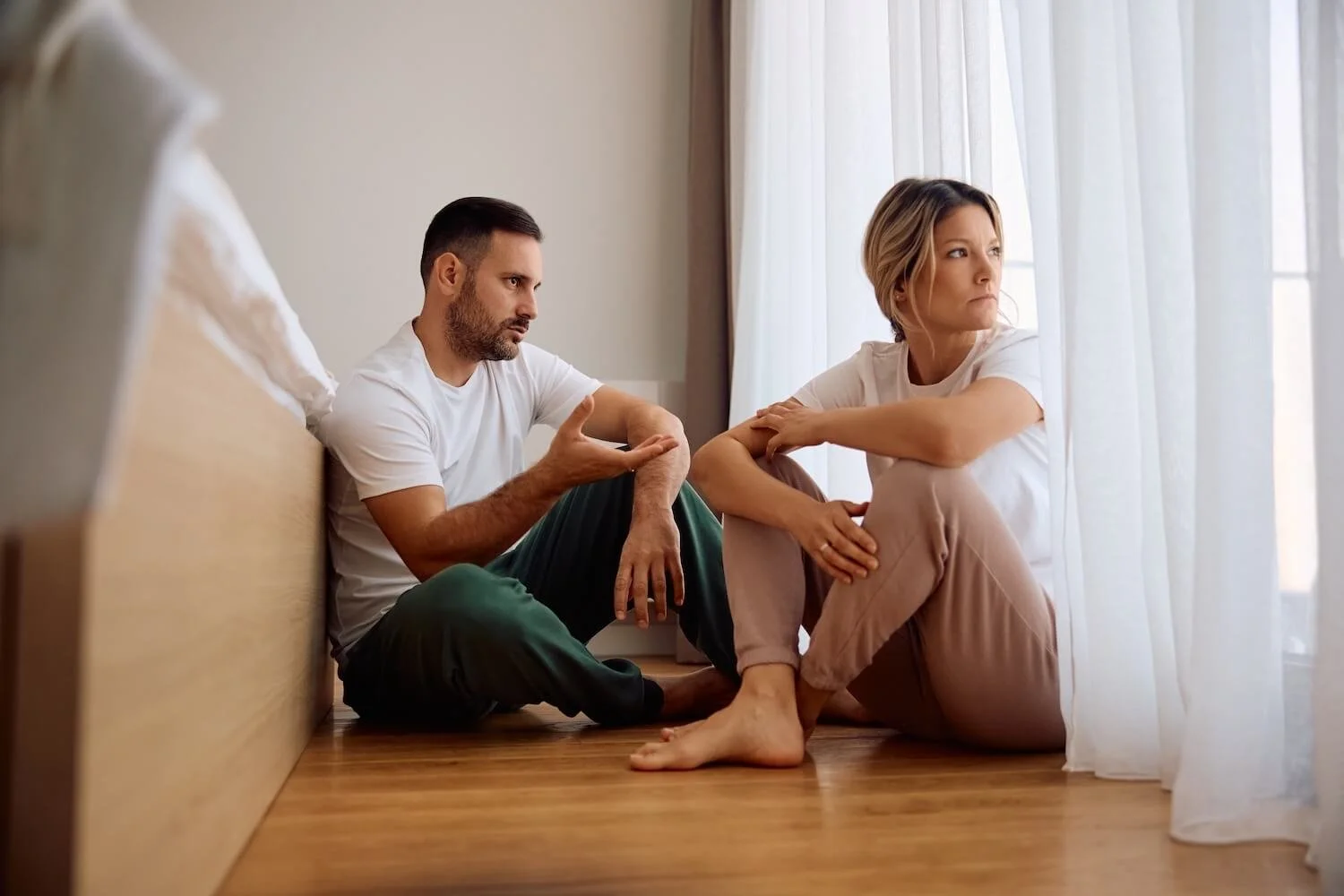
So it can be particularly humbling to sit across from the person you love and realize that neither of you knows how to get out of a conversation you've had approximately 147 times.
Marriage has a frustrating way of exposing the limits of competence.
The skills that make you effective elsewhere—efficiency, decisiveness, confidence in your judgment—don't always translate neatly into intimacy. Sometimes efficiency looks a lot like impatience. Problem-solving becomes fixing when your partner wants to be understood. Confidence becomes certainty that your interpretation of events is the correct one.
And suddenly, two perfectly intelligent people become so focused on proving what happened that neither feels understood.
Rather than pointing fingers or trying to get to the bottom of who is at fault, couples counseling helps both partners become more curious about what happens between them during conflict.



Sometimes the problem isn’t fighting. It’s that you’ve stopped finding each other.
Not every struggling couple has terrible arguments.
Some couples become exceptionally good at running a life together.
The kids get where they need to go. The calendar works. The mortgage gets paid. Dinner happens. Vacations get planned. Careers continue moving forward.
From the outside, everything may look perfectly fine. And maybe it is, mostly.
But somewhere along the way, the relationship became logistical.
You talk about what time practice starts, who is picking someone up, whether the plumber called back, what you need from the grocery store, and which weekend you're visiting family.
But you don't talk the way you used to.
There isn't as much touching, or laughing, or curiosity.
Sex may have become less frequent, more complicated, or another subject you've quietly agreed not to discuss.
You may sleep next to each other every night and still feel lonely.
You miss your partner, even though they're right there.
You became really good at running a life together.
But you miss being a couple.
Couples therapy can create space to pay attention to the relationship underneath all the logistics—to understand how you drifted apart and begin deliberately finding your way back toward one another.

Good couples counseling is about more than better communication
Communication matters. And simply teaching two people better communication skills doesn't necessarily change what happens when those skills disappear in the middle of a real argument.
The work is deeper than that.
See the pattern before you blame the person
Most couples develop a predictable way of engaging during conflict.
The more one partner pursues a conversation, the more the other withdraws. The more one explains, the more the other defends. The more someone feels ignored, the louder or more persistent they become—which makes the other person want even more distance.
Eventually, the pattern begins to look like your partner is the problem.
Couples counseling helps you recognize the pattern as the problem so that you can begin responding to each other differently.
It also means learning to tolerate the uncomfortable reality that two people can experience the same moment very differently—and that understanding your partner's experience doesn't require abandoning your own.
Learn how to repair
Even healthy couples hurt each other.
Someone gets defensive. Someone says the wrong thing. Someone misses what the other person needed. Someone realizes ten minutes later that they could have handled that much better.

The goal isn't a marriage without conflict. It’s a relationship in which you know how to come back.

To apologize without adding a defense.
To acknowledge impact even when your intention was different.
To try again.
And to trust that a difficult moment doesn't have to become three difficult days.

Couples counseling is sacred work.
It doesn’t have to feel so serious all the time.
Inviting another person into the private world of your relationship can feel vulnerable. You’re sitting down with a stranger and talking about things the two of you may struggle to talk about even when no one else is in the room.
I think couples counseling is sacred work. I get to sit with two people who have built a life together and help them understand what happens in the moments when they have the hardest time finding each other. There is something incredibly meaningful about that to me.
But “sacred” doesn’t mean every minute has to feel heavy.
If you work with me, you’ll probably laugh in my office, too. I use humor when it fits. I’m conversational and relatable. I may gently point out when the two of you have just demonstrated the exact pattern we’ve been talking about right in front of me.
Sometimes being able to recognize yourselves in the moment—and even laugh together about how predictable you’ve become—is part of what helps loosen a pattern that has felt impossible to change.
I’m not here to decide who is right.
One fear I sometimes hear, particularly from men coming to couples counseling with a female therapist, is some version of:
Is this going to be two against one?
No.
I don't see either partner as the problem, and my office isn't a courtroom where each of you presents your evidence and I determine who wins.
I'm much more interested in what happens between you.
When something difficult comes up, what does each of you do next? What happens when one of you feels criticized? What does the other do when they don't feel heard? Who moves toward the conflict? Who moves away? And how does each person's response make perfect sense to them while inadvertently making things harder for the other?
Each of you contributes to the patterns in your relationship.
That doesn't mean each person is equally responsible for every problem or that harmful behavior gets excused in the name of “both sides.” It means we're going to stay curious enough to understand what each of you brings into the room and what happens when those two experiences collide.
My job isn't to take sides. It's to help the two of you get on the same side.


Curiosity will get us further than certainty.
Couples often arrive in my office certain about what their partner is doing wrong.
And sometimes, they’re right. And being right hasn't necessarily gotten them where they want to go.
One of the things I'll ask both of you to practice is curiosity:
about your partner, about yourself, and about the cycle the two of you create together.
What happens inside me right before I get defensive?
What am I actually hoping my partner understands when I keep making the same point?
Why does walking away feel necessary to me—and what does my partner experience when I do?
What am I protecting when I insist that my version of what happened is the correct one?
Instead of trying to find who to blame, we'll try to understand what drives your pattern so that you can both choose better ways to get your needs met.
Your kids are learning about relationships from you
If you have children, part of your motivation for couples counseling may have very little to do with them—and everything to do with them.
You want their home to feel secure. You want them to know their parents love each other.
And you may be increasingly aware that they are watching what happens when the two of you disagree.
Children benefit from watching adults who can disagree and remain respectful. Who can apologize. Who can change their minds. Who can show affection after a hard conversation. Who can make room for another person's experience without surrendering their own.
They get to see that love isn't the absence of frustration.
It's what you learn to do with it.
You may be doing this work because you want a better marriage for yourselves.
But you may also be shaping what partnership looks like to the people watching you most closely.

Couples counseling in Five Forks
that fits into a full life


Many of the couples I work with are professionals, executives, entrepreneurs, business owners, and other high-achieving people carrying significant responsibility at work and at home.
Finding time for couples counseling can feel like one more logistical problem to solve.
I see couples primarily during weekday business hours at my office in the Five Forks area of Simpsonville, South Carolina. For couples with some flexibility in their workdays, daytime appointments can make it easier to protect evenings for family, activities, travel, and everything else already competing for your attention.
I prefer to work with couples in person when possible. Secure online couples counseling is also available to clients located throughout South Carolina and can be helpful when work schedules, travel, or other logistics make getting to the office difficult.
Investment
Couples therapy sessions are 60 minutes and are offered at a rate of $300 per session.
The frequency and duration of couples counseling varies based on each couple's needs, goals, and level of distress. During our initial sessions, we'll discuss recommendations for moving forward and develop a plan that feels realistic and sustainable.
Unlike individual therapy, couples counseling is not typically a covered benefit under most insurance plans. When insurance does reimburse for relationship counseling, it generally requires one partner to receive a mental health diagnosis and for treatment to be documented as therapy for that individual's condition rather than for the relationship itself. Many couples are surprised to learn that's how the system works.
Because I believe your relationship (and not a diagnosis) deserves to be the focus, I have chosen to remain a private-pay practice. This allows us to concentrate on your shared goals without the documentation requirements or treatment limitations that often accompany insurance reimbursement.
You may be able to use HSA or FSA funds to pay for eligible therapy expenses, allowing you to use pre-tax dollars toward the cost of care. Because every plan is different, I encourage you to confirm your benefits directly with your HSA or FSA administrator.
FAQ

-
The biggest question is whether you are both willing to work toward improving the relationship.
You don't have to feel optimistic. You don't have to agree about what is wrong. And one of you may be considerably more enthusiastic about counseling than the other.
But if you both fundamentally want the relationship and are willing to work on it, couples counseling is usually the appropriate place to begin.
If one partner is seriously considering ending the relationship while the other wants to save it, Discernment Counseling may be a better fit. Discernment Counseling is specifically designed to help couples gain clarity and confidence about what direction to take for their relationship.
-
That's fairly common. You don't both need to be equally excited about therapy. A partner who is skeptical, uncomfortable, or unsure whether counseling will actually help can still participate meaningfully in the process.
What matters more is whether both of you are willing to show up honestly and consider your own contribution to the relationship.
If your partner's reluctance is less “I'm not sure therapy is my thing” and more “I'm not sure I want to stay married,” I may recommend Discernment Counseling instead.
-
No. I work with committed couples who want to strengthen their relationship, whether or not they are legally married.
-
Many couples begin with weekly or biweekly sessions, depending on the concerns bringing them in and the level of distress in the relationship. We'll talk together about what makes sense for your situation rather than committing you to an arbitrary number of sessions.
-
There isn't a universal timeline. Some couples come in with a relatively specific pattern they want help changing. Others are working through years of disconnection, accumulated resentment, breaches of trust, or multiple concerns that have become intertwined.
During our initial sessions, I'll help you identify the patterns keeping you stuck and develop a clearer sense of what our work together needs to address.
-
Yes. I offer secure virtual couples counseling to clients located throughout South Carolina.
I generally prefer working with couples in person at my Five Forks office when circumstances allow, but telehealth can be an excellent option for couples whose work schedules, travel, or location make in-person sessions difficult.
-
My office is located in the Five Forks area of Simpsonville, South Carolina, convenient to couples living or working in Simpsonville, Greenville, Mauldin, Fountain Inn, and surrounding Upstate communities.
Daytime appointments are generally available Monday through Friday from 8:30am-4pm.
-
I offer both in-person and secure telehealth appointments designed to accommodate busy professionals, couples, parents, and individuals. In-person sessions are available on select weekdays, while telehealth appointments are offered throughout the week.
Because my availability is intentionally limited and may change over time, I keep my current appointment windows on my What to Expect page. If my general availability aligns with your schedule, I invite you to schedule a consultation so we can discuss your goals and determine whether we're a good fit.
-
Couples counseling requires that both partners be able to participate safely and honestly.
Conflict, frustration, raised voices, withdrawal, and saying things you regret can all occur in distressed relationships. However, traditional conjoint couples therapy may not be appropriate when there is ongoing physical violence, coercive control, intimidation, or fear for one partner's safety.
Part of my responsibility is determining whether couples counseling is an appropriate and safe setting for the concerns you are experiencing. If I believe another type of support would be more appropriate, I will talk with you about that directly.
You’re still choosing each other.
You don't have to wait until your
marriage is falling apart to ask for help.
Sometimes the most important thing a couple can recognize is simply that what they're doing isn't working—and neither of them wants to keep doing it this way.
You already know you want the relationship.
Now we can work on making it a relationship you both want to be in.
Not sure you both want to stay married?