

Discernment Counseling for Couples in Five Forks, Simpsonville,
and virtually throughout South Carolina
How did we get here?
A short-term process for couples considering separation or divorce who want greater clarity before deciding what comes next.


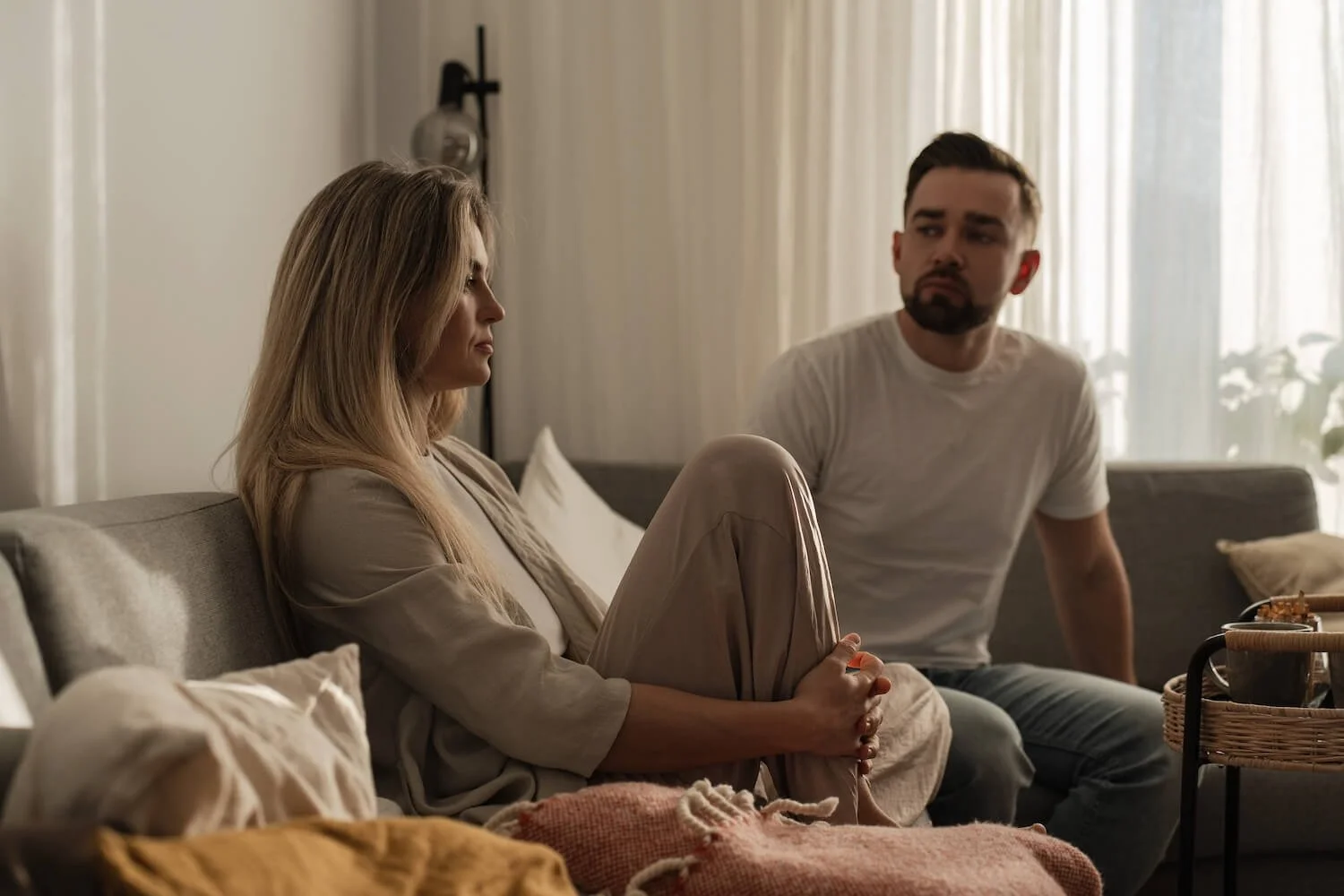
When one of you wants to save the marriage and the other is considering leaving.
By the time couples reach this point, they may have been trying to fix things for years.
One of you may have asked for change, initiated difficult conversations, suggested counseling, or tried repeatedly to explain just how serious things had become. Eventually, something shifted. The pursuing stopped. Hope started to fade. And the possibility of leaving began to feel real.
Now, the roles may seem almost reversed. The partner who wants to save the marriage may feel frantic – searching for answers, promising change, and wanting the chance to finally make things right. The partner considering leaving may feel exhausted, scared, or resigned. They may still care deeply about the marriage and the family you’ve built while questioning whether they have anything left to give.
When that’s the case, traditional couples counseling can feel frustrating for both of you.


Many couples enter marriage counseling hoping it will provide answers, only to leave feeling more discouraged. Here’s why:
-
Traditional marriage counseling assumes both partners want to repair the relationship. For highly distressed couples, that’s often not the case.
-
Typically, one partner is “leaning out,” feeling uncertain or ready to leave, while the other is “leaning in,” desperate to repair the marriage. This mismatch can make the leaning-out partner feel like the “bad guy” and the leaning-in partner feel hopeless.
-
The push to “work on things” can overwhelm the hesitant partner, which may increase conflict, disengagement, or resentment. The result? Couples sometimes spend months in half-hearted therapy that leaves them more convinced that their marriage is over.
The problem isn't necessarily that couples counseling failed. You may have started the wrong process for the decision you're actually facing.
What is Discernment Counseling?
Discernment Counseling is a structured, short-term process developed specifically for couples considering divorce when one partner is leaning out of the marriage and the other is leaning in.
Unlike traditional couples counseling, the goal is not to immediately repair the relationship or improve communication.
The goal is clarity and confidence about what comes next.
Through a combination of individual conversations and brief time together as a couple, we'll take a closer look at how your marriage reached this point, the patterns that have contributed to the current crisis, and the ways each of you may have contributed to the problems in the relationship.
I'm not here to convince you to stay married.
I'm also not here to tell you to divorce.
My role is to help you slow the decision down long enough to understand it more clearly—so whatever you decide, you're making that decision with greater insight, intention, and confidence.

Specialized Training in Discernment Counseling
I have completed specialized training in the Discernment Counseling model developed by Dr. William Doherty and the Doherty Relationship Institute.


Is Discernment Counseling right for us?
Discernment Counseling may be a good fit when one partner is considering separation or divorce while the other wants to preserve the marriage. It’s not appropriate for every couple in crisis.
Discernment Counseling may be a good fit if:
One of you is considering separation or divorce.
The other wants to preserve the marriage.
At least one partner is uncertain whether couples counseling can help.
You're willing to examine your own contribution to the relationship.
You want greater clarity before making a final decision.
Discernment Counseling is generally not appropriate if:
One partner has already made a final decision to divorce.
One partner is being pressured or coerced into participating.
There are current safety concerns or domestic violence that make joint participation unsafe.
Still not sure if Discernment Counseling is right for you?
Not every couple considering divorce is a good fit for Discernment Counseling. This free, anonymous two-minute quiz can help you determine whether Discernment Counseling or traditional couples counseling may be the better place to start.


Your responses are anonymous. You will not be asked for your name, email address, or contact information.

The three possible outcomes of Discernment Counseling
Path One:
Stay the Course
Decide not to pursue divorce or commit to couples counseling at this time. The relationship continues as it is, but with greater clarity about the patterns and challenges that brought you to this point – and what choosing not to make a change may mean for your marriage.
Path Two:
Move Toward Separation or Divorce
Make the decision to separate with greater clarity and a deeper understanding of the patterns that contributed to the problems in your marriage.
Path Three:
Commit Fully to Couples Counseling
Make a wholehearted, six-month commitment to couples counseling, with divorce off the table and a clear agenda for the changes each partner needs to make.
How does Discernment Counseling work?
Many couples describe discernment counseling as a relief. It removes the pressure to “fix things” right away and creates space for honest reflection.

Instead of rushing into divorce or dragging each other through months of halfhearted marriage counseling, couples walk away with a clearer sense of their options, their role in the challenges, and what they truly want for their future.
-
Each partner is encouraged to complete the anonymous two-minute quiz separately. Your results can help you determine whether Discernment Counseling or traditional couples counseling may be the more appropriate place to begin based on your current level of commitment, motivation, and openness to change.
-
If your quiz results suggest that discernment counseling may be a good fit, you’ll each schedule a 30-minute Clarity Call. These calls allow me to learn more about each of you, answer any questions you have about the process, and determine whether discernment counseling is the right next step. These are separate, private calls rather than a joint consultation.
-
If we mutually determine that Discernment Counseling is the right next step and you both choose to move forward, we will schedule a two-hour intake session. The session includes time together as a couple, individual conversations with each partner, and a brief joint debrief.
-
After the initial session, you may participate in up to four additional 90-minute sessions. Each session builds on what we've already uncovered, allowing both of you to develop a deeper understanding of the problems in your marriage, your individual contributions, and what path forward makes the most sense based on what you've learned.

Some couples reach clarity before completing all five sessions. Others benefit from the full process. Discernment Counseling always ends after no more than five sessions.
How much does
Discernment Counseling cost?
Discernment Counseling is a structured, short-term process rather than traditional weekly couples therapy. You do not need to commit to the full process before we determine whether it is the right fit for your situation.
Start Here
Start with two individual Clarity Calls: $50 per partner
The first step is for each partner to schedule a private 30-minute Clarity Call. These separate conversations give each of you an opportunity to share what has brought your marriage to this point, ask questions about the process, and determine whether Discernment Counseling is the right next step.
Your initial investment is $100 total—$50 per partner.
If You Choose to Continue
If, after both calls, we mutually determine that Discernment Counseling is a good fit and you both choose to move forward, the $100 you have already paid is applied toward the complete package.
The complete Discernment Counseling package is $2,100,
including the $100 already paid for your Clarity Calls.
The complete process includes:
Two private 30-minute Clarity Calls (one with each partner)
One 2-hour Discernment Counseling intake session
Up to four 90-minute follow-up sessions
A focused, structured process designed to help you gain clarity and
confidence about the future of your marriage
If you choose to move forward after the Clarity Calls, the remaining balance
of $2,000 is due before your initial 2-hour session.
Although Discernment Counseling is designed to include no more than five sessions, every couple moves through the process at a different pace. Some couples reach clarity before completing all five sessions, while others benefit from the full process.
The complete package provides space for up to five sessions so we have the time needed to fully explore the decision you are facing without extending the process indefinitely.
If you reach a decision before completing all five sessions, you will receive a refund for the unused sessions based on the fee allocation outlined in your Discernment Counseling agreement. When clinically appropriate and mutually agreed upon, you may instead choose to apply that amount toward future couples counseling with me.

Is Discernment Counseling covered by insurance?
No, Discernment Counseling is a private-pay service and is not billed to insurance.
Because Discernment Counseling is a specialized decision-making process rather than treatment for a diagnosed mental health condition, I do not submit claims to insurance or provide superbills for reimbursement. If you plan to use HSA or FSA funds, I recommend confirming eligibility directly with your plan administrator.

When the decision is this consequential, clarity matters.
Discernment Counseling creates a structured pause between uncertainty and action.
It's in understanding how you got here, what each of you has contributed,
and making your next decision with greater clarity and confidence.
FAQ

-
Traditional marriage counseling assumes both partners are equally committed to working on the relationship. Discernment Counseling is designed for couples who do not yet share that commitment—typically because one partner is leaning into the marriage while the other is considering separation or divorce.
The goal is not to immediately repair the relationship. Instead, the process helps each partner gain greater clarity and confidence about whether to stay the course, move toward separation or divorce, or make a wholehearted commitment to couples counseling. Sessions focus heavily on individual reflection rather than joint problem-solving.
-
Discernment Counseling is a short-term process of no more than five sessions.
Before beginning the process, each partner participates in a separate 30-minute Clarity Call. These private conversations allow me to learn more about your circumstances, answer questions about the process, and determine whether Discernment Counseling is an appropriate fit for your situation.
If we mutually determine that Discernment Counseling is the right next step, the process begins with a two-hour intake session, followed by up to four 90-minute sessions. Some couples reach clarity before completing all five sessions, while others benefit from the full process. Discernment Counseling always ends after no more than five sessions.
-
No. My role is not to convince you to stay married or tell you to divorce.
I will ask direct questions, challenge you to look honestly at how your marriage reached this point, and help each of you better understand the ways you've contributed to the problems in the relationship. I may encourage you to slow down when a decision feels premature, but the ultimate decision about what comes next belongs to you.
-
No. The goal of Discernment Counseling is not to save your marriage at all costs. The goal is to help both of you gain greater clarity and confidence about what comes next.
For some couples, that means making a wholehearted commitment to repairing the marriage. For others, it means deciding to separate or divorce with a deeper understanding of how the relationship reached this point and the ways each partner contributed to the problems.
Clarity is the goal, not a predetermined outcome.
-
Some couples reach clarity before using all five sessions. If that happens, the remaining unused portion of your package will be refunded according to the fee structure outlined in your Discernment Counseling agreement.
If you decide to pursue couples counseling with me and it is clinically appropriate for us to continue working together, you may instead choose to apply the eligible amount toward future couples counseling sessions.
-
If you choose to make a wholehearted effort to repair your marriage, you will enter couples counseling with a much clearer understanding of the changes that need to happen—both individually and within the relationship.
Depending on your needs and my availability, you may be able to continue couples counseling with me. If another therapist would be a better fit, I can help connect you with a trusted couples counselor who specializes in longer-term relationship work.
-
Yes. Infidelity can be one of the factors that brings couples to Discernment Counseling.
You do not have to decide whether you can forgive the affair (or whether the marriage can be repaired) before beginning the process. Discernment Counseling can help you better understand the impact of the infidelity, the broader problems in the relationship, and whether you are willing to make a wholehearted effort toward repair.
-
You can still participate in Discernment Counseling if you are currently separated or if divorce proceedings have already begun.
The more important question is whether the decision to divorce is truly final. Some couples come to Discernment Counseling while living separately, and others begin the process after one partner has already filed for divorce. As long as there is still uncertainty about whether to end the marriage, Discernment Counseling may still be appropriate.
If one partner has firmly decided to divorce and is no longer open to reconsidering that decision, Discernment Counseling is generally not the right process.
We can discuss the specifics of your situation privately during the individual Clarity Calls to determine whether Discernment Counseling may be a good fit.
-
Discernment Counseling is generally not appropriate when there is ongoing domestic violence, intimate partner violence, coercive control, intimidation, or another safety concern that would make participation unsafe.
Safety concerns are discussed privately during the initial Clarity Calls so I can determine whether Discernment Counseling is an appropriate process for your situation.
-
Yes, I provide virtual Discernment Counseling to couples throughout South Carolina.
For couples located in Greenville, Simpsonville, Five Forks, or the surrounding Upstate area, sessions may take place in person at my Five Forks office off Woodruff Road. Couples elsewhere in South Carolina can participate virtually through a secure video platform.
-
I offer both in-person and secure telehealth appointments designed to accommodate busy professionals, couples, parents, and individuals. In-person sessions are available on select weekdays, while telehealth appointments are offered throughout the week.
Because my availability is intentionally limited and may change over time, I keep my current appointment windows on my What to Expect page. If my general availability aligns with your schedule, I invite you to schedule a consultation so we can discuss your goals and determine whether we're a good fit.
Not sure what comes next?
Start with clarity.
You don’t have to decide the future of your marriage before reaching out.
The first step is simply determining whether Discernment Counseling is the right process for the decision you and your partner are facing.